Abolishing the single-purpose serving dish
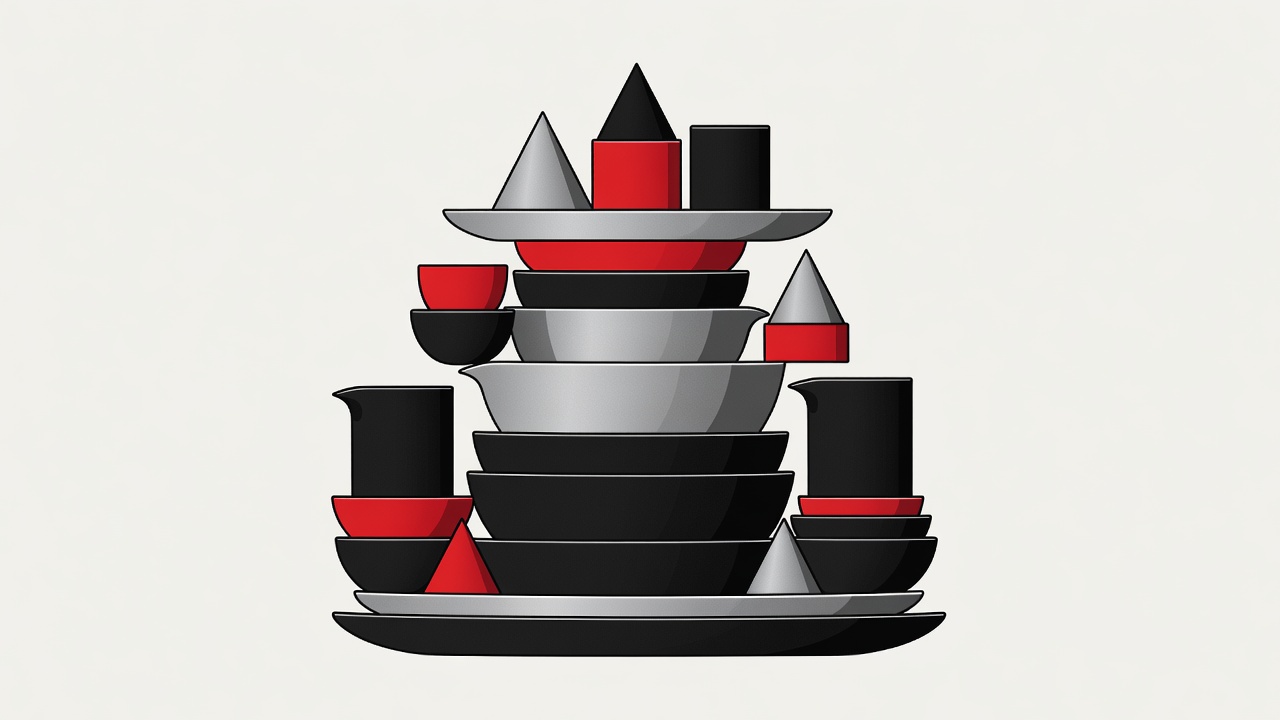
When Finnish designer Kaj Franck examined traditional bourgeois dinner sets at the Arabia factory in Helsinki, he noticed families buying 60-piece services filled with soup tureens and butter dishes used twice a year. With the 1952 Kilta (later refined into Teema) series, Franck reduced every piece to three basic geometric solids: the circle, the cone, and the cylinder.
He eliminated saucer wells so the saucer could double as a bread plate or serve as a tight-fitting lid on top of the soup bowl in the refrigerator. Vitreous stoneware allowed the same vessel to go from freezer to oven to dining table, while angled walls let twelve bowls nest in the vertical space of three traditional ones.