Reading the Material

ROUTE 03 // GRAIN, WEAVE & THERMAL CONDUCTIVITY

An object fails when its surface coating pretends to be something it is not. High-gloss synthetic varnish looks flawless on day one, then chips and yellows irreversibly under UV light. Scandinavian cabinetmakers and industrial engineers select raw substrates—slow-grown northern birch, quarter-sawn oak, kraft paper cord, vegetable-tanned saddle leather, and spring steel—that absorb the friction of daily life and can be renewed at home with soap, wax, or fine abrasive pads.

STUDY 3.1 // CELLULOSE & VEGETABLE FATS DENSITY: 670–720 KG/M³
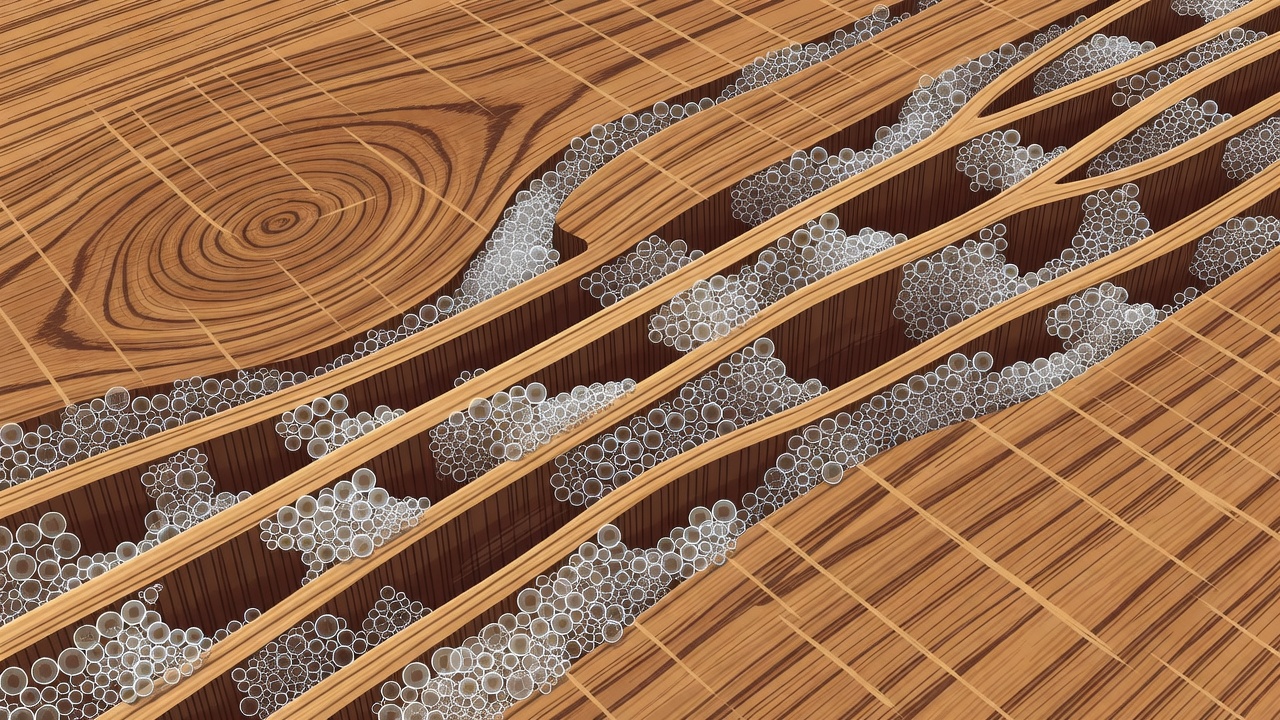
Vector microscopic cross-section of quarter-sawn oak wood vessels filled with protective soap micelles rather than a top plastic lacquer film

Slow-grown northern timber and the chemistry of soap washing

Trees growing in short Nordic summers lay down tight annual growth rings, creating dense, stable timber with minimal seasonal warping. Instead of sealing oak or ash beneath polyurethane, Danish joiners whip pure white vegetable-oil soap flakes into warm water and scrub the raw timber along the grain with a sisal brush.

The fatty acids bind deep inside the open tracheid vessels, leaving the surface microscopically breathable and pale. When a child drops a heavy toy onto a soap-treated table, the wood fibres compress rather than cracking a brittle finish. Applying a damp cotton cloth and a warm household iron steams the compressed fibres right back to level, after which a two-minute pass with 320-grit paper restores a seamless matte feel.
STUDY 3.2 // TWISTED KRAFT CORD TENSION WEAVE: 130 METRES
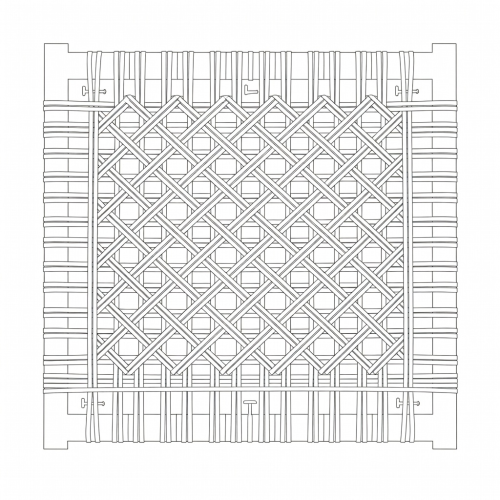
Top-down vector diagram of an envelope-pattern paper cord seat weave with L-nails hidden beneath the seat rails

Why paper cord outlasts webbing

Developed during wartime shortages of seagrass and jute, Danish paper cord spins three strands of long-fibre Swedish sulphate kraft paper into a tight 3.5 mm rope. A skilled weaver spends two hours tensioning 130 metres of cord onto a single chair frame; the result supports daily seating for 30 to 40 years before needing re-weaving.

Metals, linoleum, and wool bouclé

THERMAL PAIRING // MAINTENANCE MATRIX
STUDY 3.3 // POUL KJÆRHOLM'S STEEL PK22 FLAT SPRING BAR
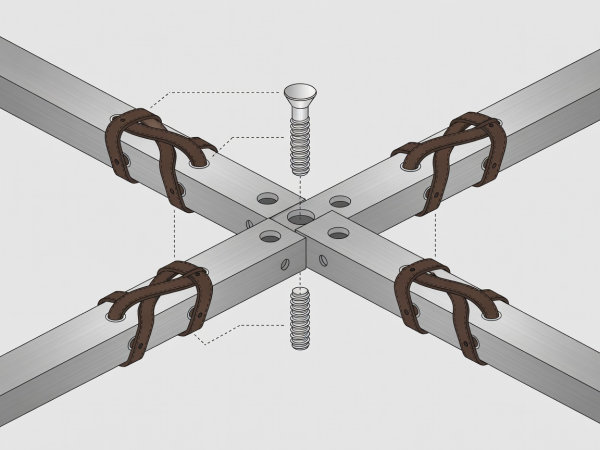
Vector exploded detail of a countersunk machine screw joining two satin-brushed flat spring steel bars with leather apron lacing

Satin steel treated like fine cabinet wood

Poul Kjærholm rejected tubular chrome steel because its mirror glare looked clinical in a living room. Instead, he used matte, draw-filed spring steel flat bars connected with exposed countersunk machine screws—giving metal the elastic spring of bentwood and the visual calm of stone.

STUDY 3.4 // DOMESTIC MATERIAL CARE SCHEDULE 30-YEAR LIFECYCLE PROTOCOL

How to read and renew every surface in the home

Every material in our atlas has a predictable aging curve. Use this field matrix to match the right material to the room's humidity and wear level:

Material Substrate Primary Use Case Tactile & Acoustic Behaviour Renewal Method
Soap-Treated Quarter-Sawn Oak Dining tables, chair frames Matte, dry-warm, zero glare Whipped white soap flakes + 320-grit de-nibbing
Furniture Linoleum (Linseed/Rosin) Desk tops, kitchen fronts Warm to forearms, deadens mug clatter pH-neutral cleaner; self-heals hairline micro-scratches
3-Ply Waxed Paper Cord Dining and lounge chair seats Breathes in summer, molds to sit bones Vacuum dust with soft brush; blot liquids dry immediately
Norwegian Crossbred Wool (Hallingdal) Upholstered lounge shells 100,000 Martindale rub count; natural lanolin Brush along nap; spot-clean with carbonated water